
How to Care for Your Kapok Cushions (and Keep Them Beautiful for Years)
Author: Thomas Date Posted:18 May 2026
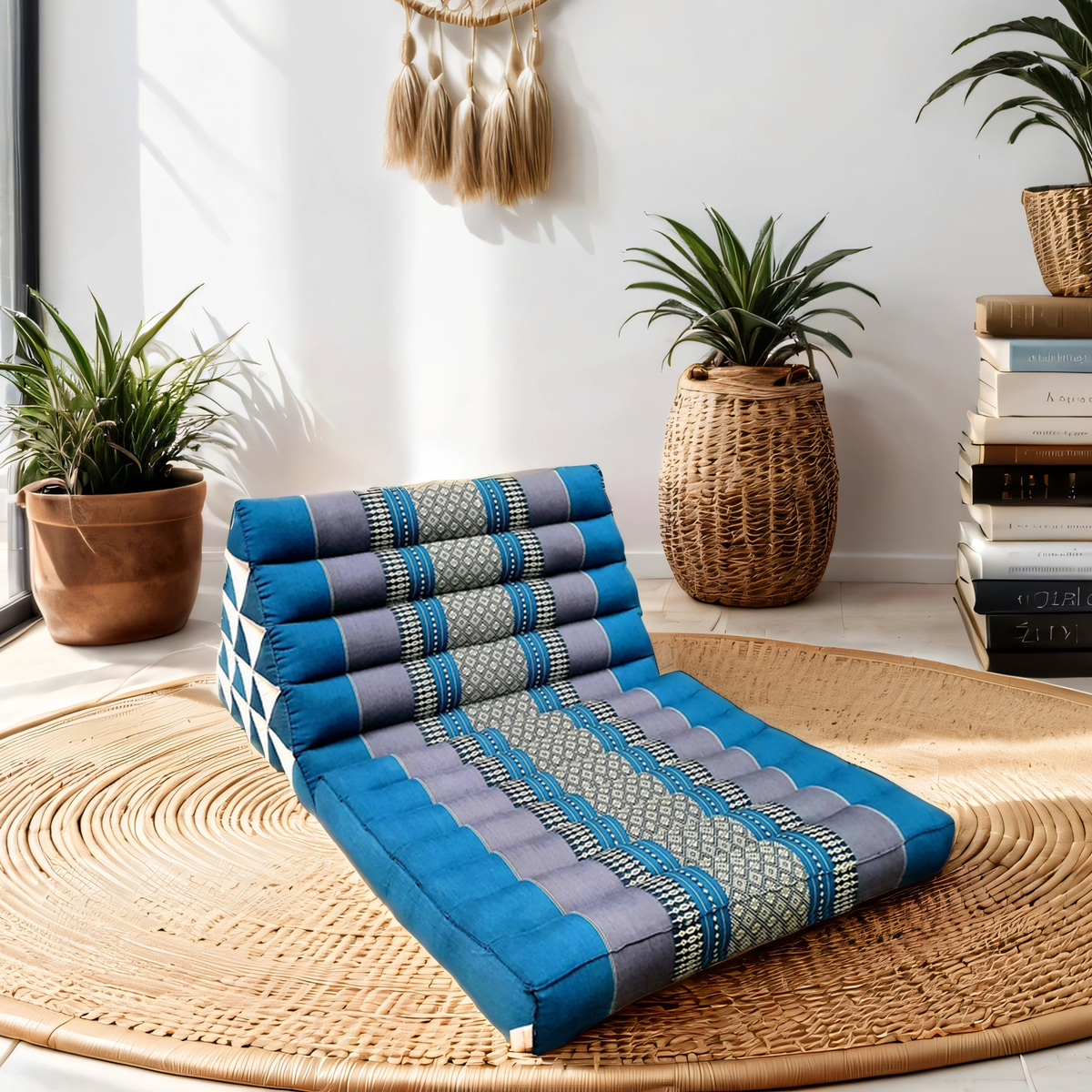
One of the questions we get most often at Mango Trees is — "how do I actually look after my kapok cushion?" Fair question. The good news is kapok is one of the easiest natural fillings to live with, once you know a few basics. We've been importing handmade Thai kapok cushions since 2010, and the same simple rules apply whether you've got a Thai triangle pillow, a meditation cushion, a yoga bolster, or a foldable kapok mattress.
Here's everything you need to know.
What makes kapok different
Kapok is a 100% natural plant fibre, harvested from the seed pods of the kapok tree. It's the same fluffy stuff that's filled cushions and mattresses in Thailand for centuries. Three things matter for care:
- It's naturally allergen-free and resistant to dust mites and mildew — kapok contains a natural bitter compound that bacteria don't love.
- It's highly absorbent — which is brilliant for breathability, but means moisture is its number-one enemy.
- It's a soft, short fibre — which means it can clump or break down if it's soaked or roughly handled.
Translation: kapok needs very little maintenance. But what little it does need matters.
The golden rules (apply to every kapok product)
- Never put the whole cushion in the washing machine. This is the single most important rule. Soaking causes kapok to clump permanently, lose its loft, and never quite recover. Even gentle cycles can damage the fibres.
- Spot clean stains as soon as they happen. A damp cloth with a tiny bit of mild soap, dab gently (don't rub), then wipe with a clean damp cloth to lift the soap off. Let it air dry completely before using again.
- Give it a sunbath every few months. Kapok loves the Australian sun. An hour or two outside on a dry day pulls out any moisture, refreshes the fibres, and naturally deals with anything funky. Don't leave it baking out there all day every week though — too much UV over years will fade the cotton cover.
- Fluff it regularly. Give it a knead, a shake, even a gentle punch. This redistributes the kapok fibres and prevents permanent compression. The more you use it, the more this matters.
- Keep it dry and breathable in storage. A clean cotton sheet over the top is plenty. Avoid plastic bags or damp cupboards — kapok and moisture don't mix.
A few product-specific tips
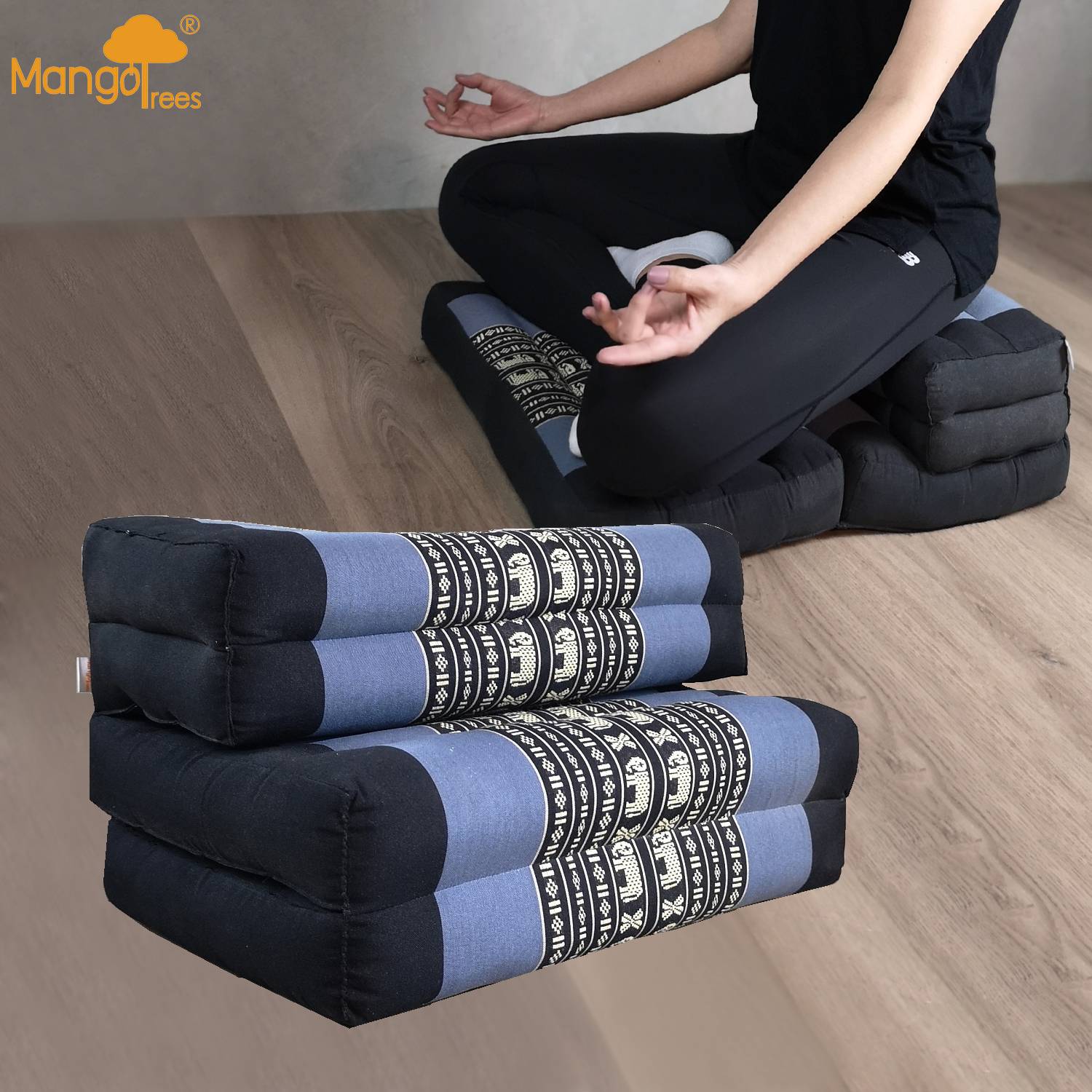
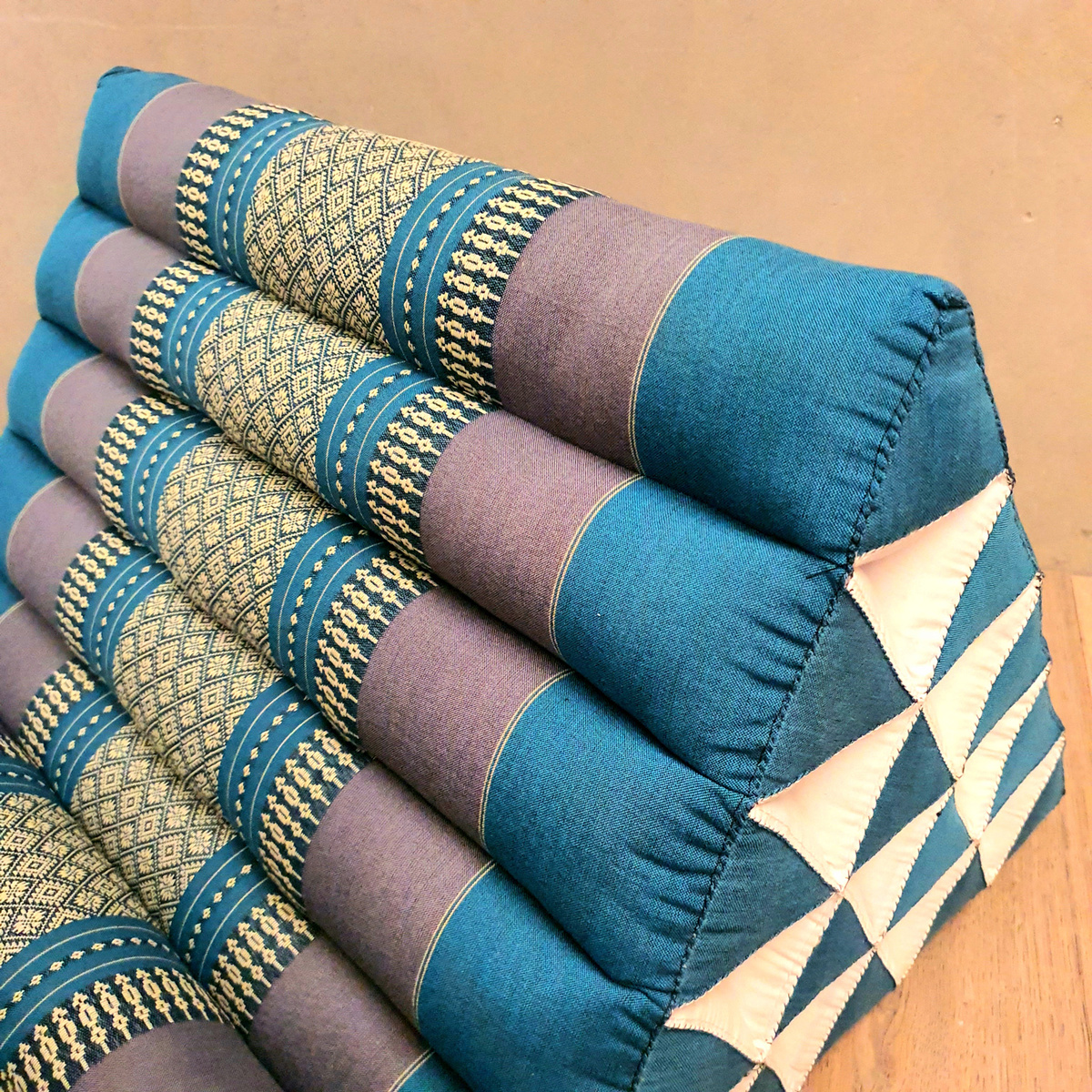
Thai triangle pillows — these are built in tubular sections, so each tube holds its own kapok and the filling can't shift around. That makes them lower-maintenance than most. Spot-clean only — don't try to remove the filling, the construction relies on it staying put.
Meditation cushions and yoga bolsters — most of ours come with removable covers via a zipper. If yours does, you can take the cover off, machine-wash it on a cold, gentle cycle with a mild detergent (no bleach, no fabric softener), and line dry. Tumble drying will shrink the cotton — don't risk it.
Foldable kapok mattresses (the larger Mon Thai daybeds) — too big to wash, full stop. Spot clean only, and air them in the sun every couple of months. We've got customers who've had theirs going for well over a decade on this treatment alone.
A note on natural variation
Quick heads-up: every one of our cushions is 100% handmade in Thailand, so each one is slightly unique. Colours can vary a touch from what you see online, sizes might differ by a centimetre or two, and the surface might feel a little different on each side. That's not a fault — that's what something genuinely made by hand looks like.
Common questions we get
"I just unwrapped mine and it has a slight smell — is that normal?"
Yep, totally normal. Pure kapok has a faint, slightly earthy or musty scent when it first comes out of the packaging. It's the natural smell of the plant fibre itself — and honestly, it's a good sign, because it means the fibre hasn't been treated with chemicals or perfumes to mask anything. Synthetic fillings don't smell because they're synthetic. Real kapok does, a little.
The good news: it dissipates quickly. A couple of hours in a well-ventilated room is usually enough. If you want to speed it up, leave the cushion outside in fresh air for a day (in the shade — long stretches of hot direct sun will fade the cover). In humid climates, give it an extra day or two. Most customers stop noticing it within a week.
"I see some white powdery dust on the fabric — is that mould?"
Almost certainly not. What you're seeing is fine kapok fibre dust that has worked its way through the cotton weave from the inside. Kapok fibres are naturally short (around 10–35mm) and a bit brittle, so it's normal for a tiny amount of fine fibre to migrate through the fabric over time — especially with handmade products where the seams are stitched by hand.
Three quick ways to tell it apart from real mould:
- Kapok dust wipes off easily with a dry cloth or a light vacuum. Mould stains the fabric and spreads.
- Kapok dust is dry, light, and powdery. Mould is usually damp, darker, and has a distinct musty smell.
- Kapok is naturally mould-resistant — the fibre has a high lignin content that makes it actively hostile to mould, mildew and dust mites. Genuine mould on a kapok cushion is rare unless it's been soaked or stored somewhere damp.
The fix is simple: give the surface a quick vacuum on a gentle setting, or wipe it down with a slightly damp cloth and let it air dry. Then give it a sunbath for good measure.
"How long should a kapok cushion last?"
With the care above? Decades. Genuinely. Kapok doesn't break down the way foam does — at worst, it slowly compresses and softens over years. If yours ever loses its shape, the cover can usually be re-stuffed rather than replaced. We sometimes hear from customers about cushions they bought 10+ years ago, which is exactly the kind of longevity natural fibres are built for.
Curious to explore the range? Have a browse of our Thai kapok cushion collection — triangle pillows, meditation cushions, yoga bolsters and foldable mattresses, all handmade in Thailand and imported direct.